
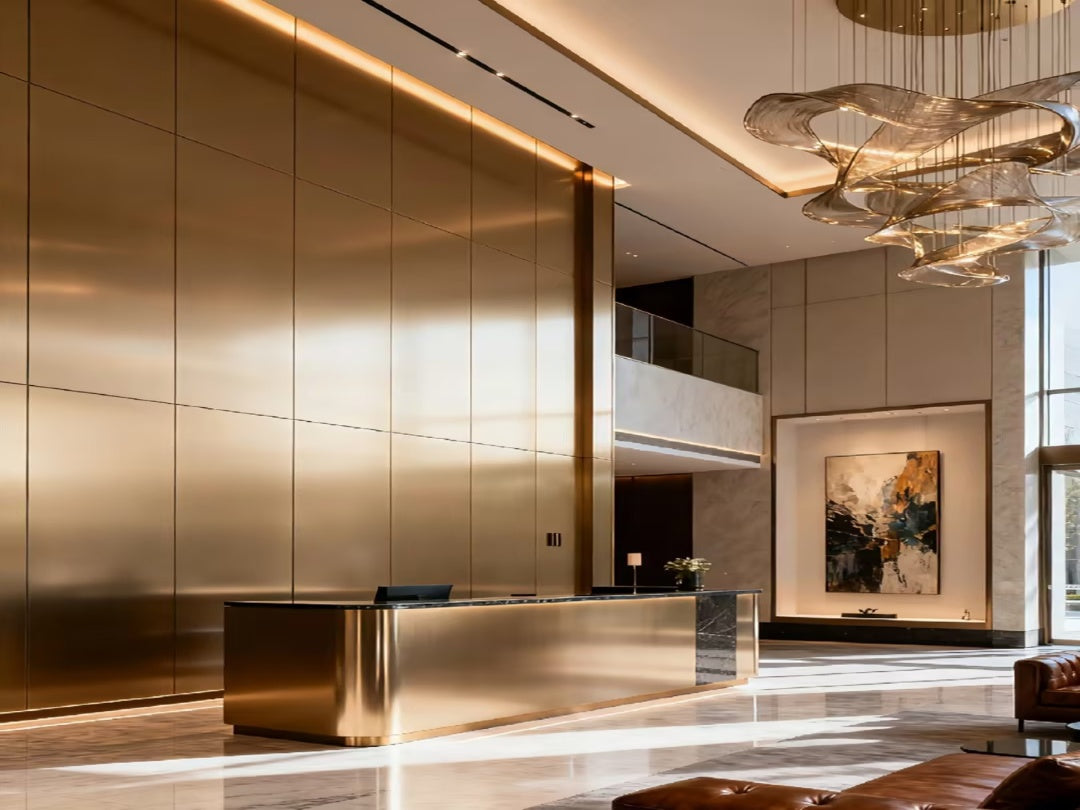
Metal wall panels are becoming a go-to choice in commercial spaces for good reason. They stand up to constant traffic, keep their appearance for years, and give designers a lot of creative freedom. Unlike painted drywall that chips or wood that warps, metal panels stay clean and sharp with relatively little maintenance—ideal for hotels and retail stores that can’t constantly shut down for touch-ups.
What Makes Indoor Metal Wall Panels Different from Regular Wall Finishes?
Indoor metal wall panels stand out from traditional finishes because of how they’re built, how long they last, and how flexibly they can be used in complex commercial environments.
Material Composition and Types
Most commercial systems use aluminum, steel, or copper with typical facing thicknesses around 0.032–0.063 inch. Aluminum dominates because it’s light (about one-third the weight of steel by volume) and naturally corrosion-resistant. Steel is preferred where impact resistance is critical, such as busy corridors or back-of-house areas. Panels are finished at the factory with powder coating, anodizing, or brushed treatments that lock in color and protect the metal underneath.
Durability That Actually Lasts
Well-designed aluminum panel systems can perform reliably for decades; many commercial wall and façade systems are designed or warranted for 30–50 years when maintained correctly. By contrast, paint in high-traffic corridors often needs refreshing every few years, typically in the 3–7 year range depending on use and cleaning. Metal panels don’t dent as easily as drywall, don’t absorb moisture like wood, and don’t provide a friendly surface for mold—important for hospitality and food-adjacent areas. Installed costs for many interior metal systems often fall around $9–$25 per square foot, versus roughly $2–$6 for finished, painted drywall, but you’re trading repeated repainting for a longer-life finish.
Design Flexibility You Can Actually Use
Metal panels come in a huge range of looks: brushed bronze, mirror-polished stainless, matte black, perforated patterns, embossed textures, and even custom-printed graphics. Designers can mix panel sizes, create 3D patterns, or combine different metals on one wall. Hotels use this flexibility to keep brand standards consistent while giving each property unique details; retailers use it to reinforce identity, from cool brushed aluminum for tech brands to warmer copper tones for lifestyle and home stores.
How Do Metal Wall Panels Transform Hotel Interiors?
Hotels need interiors that feel memorable yet survive around-the-clock use. Metal wall panels help in every key zone.
Lobby and Reception Areas
Lobbies must impress fast while surviving luggage carts, umbrellas, and constant contact. A textured metal feature wall or a backlit perforated panel behind the front desk instantly creates a focal point and hides minor scuffs better than paint. Large urban hotels with heavy daily check-ins often report that floor-to-ceiling brushed metal walls still look essentially new after years of use, with only routine cleaning.
Guest Room Accent Walls
Metal panels work well as headboard backdrops rather than full-room cladding. A defined panel zone behind the bed in champagne, soft pewter, or warm gray metal keeps rooms feeling open but finished. Panels can be installed over existing drywall during renovations, shortening project timelines and helping hide minor imperfections that would otherwise mean constant repainting between stays.
Dining and Bar Spaces
Restaurant and bar walls face grease, spills, and temperature swings. Stainless steel behind bars cleans quickly and resists staining; decorative metals such as copper can be allowed to develop a patina for character. In many boutique hotels, a controlled, naturally aging copper or brass wall becomes part of the storytelling and is frequently mentioned by guests as a distinctive design feature.
Elevator Lobbies and Corridors
Elevator lobbies and corridors take continual hits from luggage and carts. Metal wall panels protect these zones far better than painted gypsum. Reflective or semi-reflective finishes help narrow halls feel brighter and more spacious. Typically, designers will use one feature wall per corridor run instead of wrapping every surface to avoid an overly “cold” or industrial feel.
Where Do Metal Wall Panels Fit in Retail Store Design?
Retail spaces need finishes that look premium, survive frequent re-merchandising, and support visual storytelling. Metal panels work across all main zones.
Window Display Backgrounds
Metal backdrops are ideal for window displays. They can be compatible with magnetic fixtures, stand up to frequent prop changes, and don’t show pinholes like painted walls. Bronze or copper-toned panels are especially popular for fashion, as they pair well with varied color palettes. Mounted on removable frames, they can be swapped out seasonally without full renovation.
Product Display Systems
Modular metal panel systems can integrate shelving, lighting, and signage into a single wall. Perforated aluminum systems with concealed attachment points let retailers reconfigure displays for new product drops without new carpentry each time. Over time, this cuts recurring millwork costs and reduces repairs associated with repeated drilling into drywall.
Perforated interior wall panels from Ansus Metal are a good example of this approach: the panels are engineered for retail and commercial interiors and can be backed with acoustic or lighting elements while still providing hidden fixing points for adjustable shelves and brackets.
Fitting Room Upgrades
Fitting rooms see constant touch, abrasion, and elevated humidity. Metal panels resist this wear, while finishes like matte black, warm metallics, or soft brushed tones make compact rooms feel elevated and more photogenic. Panels are usually mounted over standard drywall, turning basic rooms into Instagram-ready spaces while staying within typical finish-upgrade budgets.
Checkout Counter Surrounds
At checkouts, metal wall panels provide a durable backdrop where POS equipment and carts frequently bump walls. They help visually anchor the counter area and also offer solid mounting points and built-in cable management paths for screens and hardware.
Brand Identity Walls
For feature walls with logos, metal panels allow precise color and texture matching and give dimensional signage a much more premium look versus painted walls. Electronics retailers often prefer brushed aluminum for a tech-forward feel, while home and lifestyle brands lean toward warmer brass or copper finishes.
What Should You Know About Installing and Maintaining Metal Wall Panels?
Getting long-term performance from metal wall panels depends on good preparation, appropriate mounting systems, and simple but consistent maintenance.
Wall Preparation Requirements
Substrate walls must be reasonably flat; waves or bumps will telegraph through the finished surface. Installers typically correct major irregularities first. Many commercial projects either build out furring or framing to create an air gap (which helps with moisture management and services) or mount directly to smooth drywall with appropriate adhesives or fasteners.
Concrete substrates often require moisture testing and, where necessary, additional separation to avoid corrosion issues behind metal.
Mounting Systems and Methods
Common approaches include structural adhesive and tape systems for lighter aluminum panels, mechanical fasteners for heavier or larger panels, and z-clip or rail systems where future removal is likely.
Each method has specific load and spacing requirements, and commercial work must comply with local building codes. Z-clip systems create a small, deliberate shadow gap; adhesive systems can deliver an almost perfectly flush appearance.
Cleaning and Upkeep Methods
Routine cleaning is straightforward: a microfiber cloth lightly dampened with water usually handles everyday smudges. For deeper cleaning during quarterly or semiannual housekeeping cycles, pH-neutral cleaners are recommended. Abrasive pads and harsh chemicals should be avoided, especially on anodized or specialty finishes.
Because maintenance can typically be folded into regular janitorial routines and the surfaces are durable, long-term upkeep costs are often lower than for finishes that require frequent repainting or patching.
Fire Ratings and Code Compliance
Most metal materials are inherently non-combustible and can help assemblies achieve a Class A fire rating, but adhesives, substrates, and any insulation layers all affect the final rating.
For commercial projects, it’s essential to specify fire-rated systems where required and to use installers who understand local codes and permitting. Expect some additional cost for compliant assemblies and documentation, especially in high-occupancy or egress-critical areas.
FAQ
Q1. Can Metal Wall Panels Reduce Noise in Busy Hotel Corridors or Retail Spaces?
Metal by itself doesn’t absorb much sound, but many systems include acoustic options. Perforated panels combined with mineral wool or similar insulation behind them can reach high sound-absorption ratings (for example, NRC values around 0.7–0.9 in some products), which significantly cuts down on reverberation and perceived background noise compared with bare drywall. Hotels that retrofit corridor walls with these assemblies often report fewer noise complaints. An air gap behind the perforated face is key for acoustic layers to work properly.
Q2. How Do Metal Wall Panels Perform With Heavy HVAC Demands or Temperature Swings?
Aluminum panels tolerate temperature swings well, expanding and contracting in a predictable way that can be handled through proper joint and trim detailing. This prevents buckling and “oil canning” under daily thermal cycles. Steel panels in humid environments need more attention to condensation, usually managed with an air gap and drainage or weep holes at the base of the system. In hot-climate hotel and retail entrances, systems engineered and installed according to manufacturer guidelines have shown long-term performance without major warping or finish failure.
Q3. What Happens When a Metal Panel Gets Damaged in a Commercial Setting?
One advantage of panelized systems is easy replacement. If a panel gets dented by luggage or equipment, that single unit can be removed and swapped without refinishing an entire wall. Many manufacturers retain finish data and reference samples for years, making it easier to order visually compatible replacements. It’s good practice to order a small stock of spare panels in the original production run and store them on-site. With accessible clip or rail systems, swapping a panel can usually be done during off-hours with minimal disruption.
Conclusion
Metal wall panels provide what hotels and retail spaces need most: long-lasting durability, clean aesthetics, and manageable maintenance. Whether you’re refreshing an existing property or designing a new flagship store, these systems solve practical problems while opening up broader design options. When you’re ready to move forward, reviewing physical samples in your target finishes is the best way to judge texture, sheen, and color in real project lighting before making a final specification.
If you are comparing real-world options, our Ansus metal interior wall panel range—covering aluminum, stainless steel, corrugated, and perforated systems with multiple coating and texture choices—is a practical starting point for hotel and retail projects that need commercial-grade performance and branded design flexibility. Ready to explore options? Contact our team directly to request sample panels in your target finishes and profiles—seeing and touching our materials in person will make your final design decisions much easier.
Share:
Cleaning And Maintenance Guide For Metal Interior Wall Panels
2025 Design Trends – Wire Mesh for Railings