
- What's the Difference Between 304 and 316 Stainless Steel Architectural Mesh?
- When Do You Need 316 Stainless Steel Wire Mesh?
- Can You Use 304 Stainless Steel Metal Screen for Indoor Projects?
- What Does 304 Vs 316 Look Like in Real Building Applications?
- How to Pick the Right Architectural Metal Mesh for Your Project?
- Frequently Asked Questions
- Conclusion
Picking between 304 and 316 stainless steel architectural mesh comes down to where you're installing it and how much you want to spend. For most indoor projects and dry climates, 304 does the job just fine and saves you money. But if you're near the ocean or dealing with chemicals, 316 is worth every extra penny. Let's break down exactly what makes these two different so you can choose the right one.
What's the Difference Between 304 and 316 Stainless Steel Architectural Mesh?
The main thing that separates these two grades is what they're made of, and that affects everything else. Here's a straightforward comparison:
| Comparison | 304 Stainless Steel Wire Mesh | 316 Stainless Steel Metal Screen |
| Material Composition and Performance | 18–20% chromium, 8–10.5% nickel, no molybdenum | 16–18% chromium, 10–14% nickel, 2–3% molybdenum |
| Corrosion Resistance | Handles normal air exposure well; rusts in chloride or acidic environments; best for dry, low-pollution areas | Excellent resistance to chlorides, salt spray, and acids; perfect for marine and chemical environments |
| Price and Value | Typically lower cost than 316 (pricing varies with alloy surcharges and market timing) | Typically higher cost than 304 (pricing varies with alloy surcharges and market timing) |
| Tensile Strength | ≥515 MPa minimum tensile strength (annealed plate/sheet; typical spec baseline) | ≥515 MPa minimum tensile strength (annealed plate/sheet; typical spec baseline) |
| Temperature Range | Intermittent service to 870°C; continuous service to 925°C | Intermittent service to 870°C; continuous service to 925°C |
| Welding Performance | Easy to work with and weld | Good, but needs more skilled welding techniques |
| Surface Finish Durability | Polished and brushed finishes look great; medium-term shine retention | Surface treatments last longer; better stain resistance |
| Expected Lifespan | Indoor: often decades with routine cleaning; Outdoor (inland/non-chloride): depends on exposure, finish, and maintenance | Coastal/chloride exposure: often selected to avoid pitting/crevice corrosion; actual service life depends on design, finish, and maintenance |
The 2-3% molybdenum in 316 creates a protective barrier against salt and chlorides that 304 can't match, significantly improving pitting resistance in harsh environments. While 316 costs 20-30% more upfront, replacing corroded 304 mesh after just five years in coastal areas ends up costing far more than choosing 316 from the start.
When Do You Need 316 Stainless Steel Wire Mesh?
Not every project needs the heavy-duty option. Here's when 316 becomes necessary rather than optional.
Coastal and Marine Environments
Salt air is brutal on metal. If your project sits in a coastal salt-spray zone or right on the waterfront, 316 is basically required. The salt spray carries chlorides that attack 304 faster.
Beach houses, waterfront restaurants, marina facilities—these all need 316 to avoid constant maintenance headaches.
Industrial and Chemical Exposure Settings
Factories, chemical plants, and food processing facilities deal with stuff that wrecks regular stainless steel metal screens. Cleaning chemicals, industrial emissions, and even certain food acids will corrode 304 over time. The 316 grade handles these exposures without breaking down.
High Humidity and Extreme Weather Conditions
Areas with year-round high humidity or heavy pollution need the extra protection, too. Cities with industrial smog, tropical climates with constant moisture, or places that use road salt in winter—316 performs better in all these situations. The investment pays off when you're not repainting or replacing panels every few years.
Can You Use 304 Stainless Steel Metal Screen for Indoor Projects?
Absolutely, and it's often the smarter choice. Let's look at why 304 works great inside buildings.
Suitable Indoor Applications
Shopping malls, office lobbies, interior partitions, ceiling panels—304 handles all these perfectly. The controlled environment means no salt spray, limited humidity changes, and minimal chemical exposure.
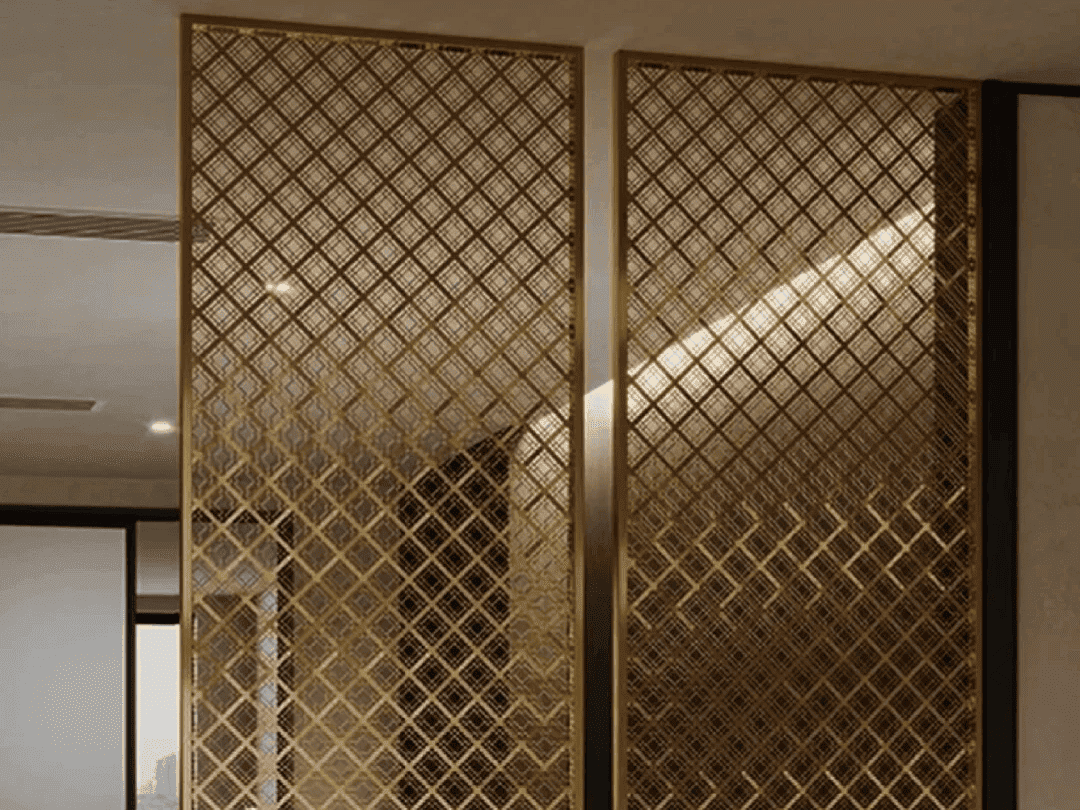
Museums use 304 architectural metal mesh for display cases. Hotels use it for decorative room dividers. The material looks identical to 316 but costs significantly less.
Lifespan Expectations
In climate-controlled spaces, the 304 architectural metal screen often lasts for decades with basic cleaning. The chromium creates a passive oxide layer that helps protect the surface.
Maintenance Simplicity
304 needs minimal upkeep indoors. Wipe it down with soap and water every few months, and you're good. No special cleaners required. The smooth surface resists dust buildup, which makes it popular for healthcare facilities and clean rooms where hygiene matters.
What Does 304 Vs 316 Look Like in Real Building Applications?
Seeing how these grades perform in actual buildings helps make the choice clearer. Here are real-world comparisons across different regions and scenarios.
Where 304 Stainless Steel Architectural Mesh Works Best
Indoor Commercial Spaces
- Shopping mall decorative partitions: climate-controlled, no salt exposure, typically hold up well long-term with routine cleaning
- Hotel lobby ceiling panels: maintain shine with regular cleaning, low maintenance costs
- Office building elevator cabs: perform excellently in inland cities like Denver and Phoenix
- Museum display cases: long-term stability in humidity-controlled environments
Outdoor Applications in Dry Inland Regions
- Arizona patio shade structures: extremely low humidity, 304 performs well
- New Mexico building facade decorations: dry climate, minimal rain, and fog
- Colorado plateau area fencing: far from coastlines, clean air
Light-Duty Environments
- Residential interior stair railings: home environment, low contact frequency
- Apartment balcony decorative mesh (inland cities): occasional rain exposure, quick drying
- Gym locker room partitions: well-ventilated, regularly cleaned
Where 316 Stainless Steel Wire Mesh Is Essential
All Coastal Outdoor Applications
- Florida beachfront villa window screens: constant salt spray exposure, 316 is commonly specified to reduce pitting and staining risk over time
- California coast restaurant patio screens: within proximity of the ocean, 304 can show staining or pitting sooner without frequent rinsing and careful detailing
- Oregon dock railing systems: direct seawater splash environment
- Hawaii resort exterior wall decorations: extreme humidity plus salt spray
Industrial and Chemical Environments
- Chemical plant ventilation grilles: acidic gas exposure, 304 can corrode faster depending on the specific chemicals and concentrations
- Food processing facility partitions: frequent chemical cleaner contact
- Pharmaceutical cleanroom dividers: areas with frequent chemical disinfection often favor 316 or 316L for added corrosion resistance
- Wastewater treatment facility barriers: chlorine and sulfide environments
Winter Road Salt Regions
- Minnesota parking garage stairwells: 304 may develop rust staining over time, where de-icing salts accumulate, and surfaces stay damp
- Chicago municipal building entrances: heavy pedestrian traffic brings in road salt
- Boston subway station decorative mesh: salt-laden moisture can accelerate staining and pitting on 304 without regular washdowns
- Michigan bridge protective screening: direct road salt spray contact
High Humidity Urban Outdoors
- Houston commercial plaza shade structures: year-round high humidity
- New Orleans building facades: tropical climate plus industrial pollution
- Seattle outdoor canopies: constant rainfall, high moisture
- Miami pool area fencing: chlorine plus salt spray dual corrosion
These cases clearly demonstrate: 304 offers the best value in controlled indoor and dry inland environments, while 316 is essential in any setting involving salt, chemicals, or persistent moisture. Matching the correct grade to your project's specific location and exposure conditions significantly reduces long-term total costs.
How to Pick the Right Architectural Metal Mesh for Your Project?
Smart selection means looking at several factors together, not just price tags.
Environmental Assessment Points
- Start by checking your location.
- Pull up a map and measure your distance from the coast.
- Look at local pollution levels and humidity averages.
If you're in a dry, inland area with clean air, 304 saves you money without sacrificing performance. But even in areas that regularly get salt-laden wind, 316 is the safer bet.
If you are unsure after a site check, we can help you narrow it down at Ansus Metal by matching grade and finish to the exposure, including options like PVD Ti-coated decorative mesh for better stain resistance and longer-looking finishes.
Budget VS. Long-Term Cost Balance
Calculate the total ownership cost, not just the purchase price. Yes, 316 stainless steel wire mesh costs more initially. But factor in potential replacement, additional maintenance, and the hassle of early failure. A smaller upgrade now beats a much larger replacement bill later. Commercial projects especially need to think long-term since replacing installed architectural metal screens disrupts business.
Design Aesthetics and Functional Requirements
Both grades polish up beautifully, so looks aren't usually the deciding factor. Think about your functional needs instead.
- High-traffic areas need durability.
- Security applications need strength.
- Ventilation systems need specific opening patterns.
Match the stainless steel metal screen specifications to your actual use case, then choose the grade that works in your environment.
Frequently Asked Questions
Q1. Can I Install 304 Architectural Mesh in a Covered Outdoor Space?
Covered patios and breezeways present a tricky middle ground. If the space stays genuinely dry and you're not near the coast, 304 can work. But "covered" doesn't mean "protected from humidity." Rain splashes in, morning dew forms, and seasonal weather changes still affect the material. Most architects play it safe and spec 316 for any exterior installation, even under overhangs. The small upcharge beats explaining to clients why their architectural metal mesh is spotting with rust sooner than expected after installation.
Q2. Does the Wire Thickness Affect the Choice Between 304 and 316?
Thinner wires actually increase the importance of choosing the right grade. When you reduce wire diameter to create a finer mesh pattern, you reduce the material's overall corrosion resistance buffer. A thin 304 stainless steel wire mesh will fail faster in harsh conditions than a thicker one because there's less metal for corrosion to work through before structural integrity suffers. If your design calls for delicate, fine-weave architectural metal screen in a coastal or industrial setting, 316 becomes even more critical to ensure the expected lifespan.
Q3. How Can I Tell If Existing Architectural Metal Mesh Is 304 or 316?
Visual inspection won't tell you anything—they look identical. The only reliable method is testing with specialized equipment or checking original specifications. Some manufacturers stamp grade markings on edges, but these often get trimmed during installation. If you're buying a building with existing stainless steel metal screen and need to know the grade for maintenance planning or matching new sections, contact a metal testing lab. They can perform non-destructive X-ray fluorescence testing to identify the alloy composition accurately.
Conclusion
The right architectural mesh grade depends entirely on your specific situation. Indoor projects in normal climates work great with 304. Anything near water or chemicals needs 316. Don't guess—assess your environment honestly, calculate real long-term costs, and pick the grade that won't let you down.
If you want a faster, spec-friendly decision, we can provide architectural mesh options in 304, 316, and 316L, plus help you align weave, frame style, and finish with your install location so the mesh stays clean-looking for the long run.
Share:
5 Beautiful Decorative Wire Mesh Inserts for Cabinet Doors
How to Detail Metal Panels to Stop Facade Leaks: A Practical Guide