
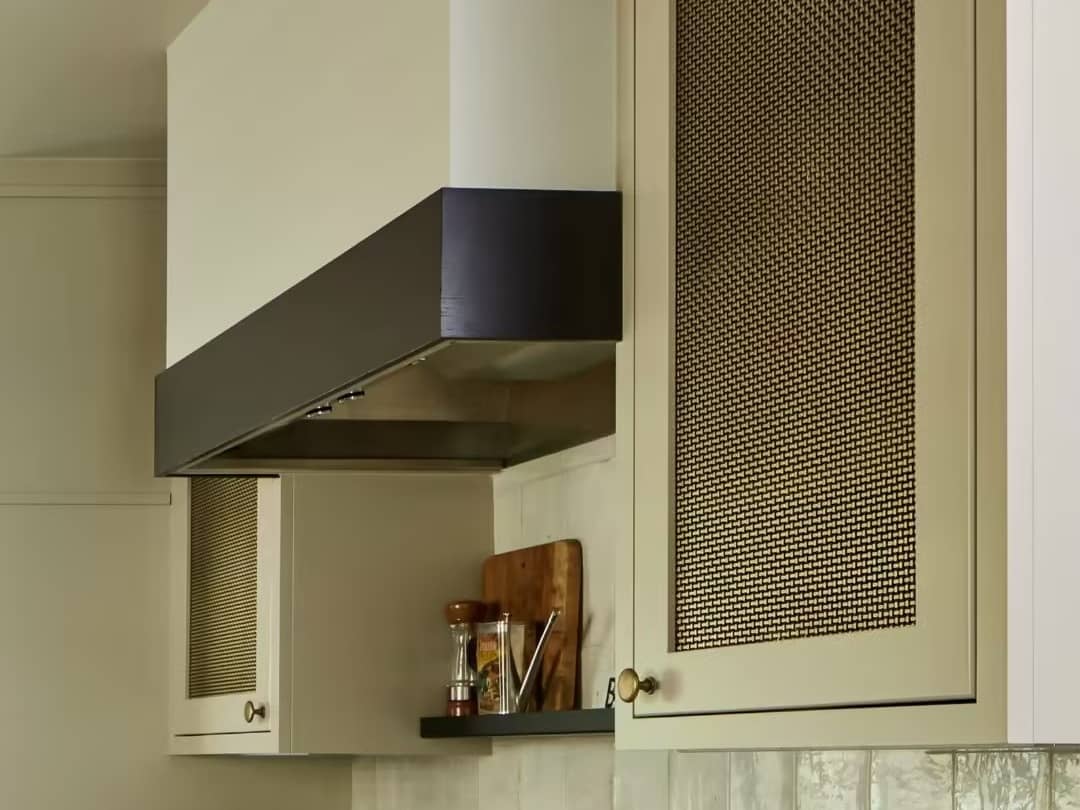
Tired of boring cabinet doors? Wire mesh inserts might be your answer. These decorative metal screen mesh panels turn plain cabinets into eye-catching features while letting air flow through. From classic woven patterns to modern geometric designs, wire mesh sheet options give your kitchen or bathroom a fresh look.
What Are the 5 Beautiful Decorative Metal Screen Mesh Styles?
Choosing the right decorative metal mesh screen can seriously change how your cabinets look and work. Here are five styles you’ll actually see in real homes, plus what each one feels like in everyday use.
Classic Woven Wire Mesh Pattern
This is the safest, most flexible choice.
Classic woven mesh is made by crossing thin wires over and under, like a tight basket weave.
It fits farmhouse kitchens, traditional spaces, and even simple modern rooms.
The openings are usually on the smaller side (often around 6 mm, about 1/4 inch), so air can move through, but the stuff inside doesn’t sit fully on display. Many people use it on upper cabinets to reduce that “stuffy” smell while still keeping dishes from collecting dust.
Perforated Decorative Metal Screen Design
Perforated metal looks cleaner and more “finished.” Instead of woven wires, it’s a flat metal sheet with holes punched through it. The holes can be round, square, or hexagon shapes.
Common hole sizes include:
- 1/8 inch diameter - most covered, hides the most
- 3/16 inch diameter - balanced look, steady airflow
- 1/4 inch diameter - more open, shows more of what’s inside
Because it’s a solid sheet, it can handle moisture well when the metal and coating are chosen for the space, and the pattern looks neat and modern.
If you’re picky about hole pattern consistency across multiple doors, a supplier that supports perforated sheets and pattern choices—like ansusmetal’s perforated/metal screen direction—can help you keep every cabinet front looking uniform.
Vintage Brass Finished Wire Mesh
If you want a warmer, richer look, brass-finished mesh is an easy win. The gold tone feels less “industrial” than plain steel and works with both dark and light cabinet frames.
This style works especially well in:
- Butler’s pantries
- China cabinets
- Bar areas
- Display cabinets
Brass also reflects light differently as the day changes, so the cabinet fronts don’t look flat or dull.
Modern Geometric Decorative Metal Mesh Screen
Geometric mesh is bold and more design-forward. These panels use repeating shapes like diamonds, hexagons, or sharp angled patterns.
They look best in:
- Contemporary kitchens with flat cabinet doors
- Home office bookcases, entertainment centers
- Mid-century modern updates
A simple rule is to keep the pattern “busyness” close to the rest of your room, so it doesn’t fight your other finishes.
Rustic Farmhouse Wire Mesh Style
This is like classic woven mesh, but heavier and rougher in texture. The wires are thicker (typically a heavier, sturdier wire than standard decorative mesh), and the weave is more open. It’s similar to chicken wire, but made to look cleaner for indoor use.
Great for:
- True farmhouse kitchens
- Rustic cabins
- Shabby chic looks
- Mudroom storage
How Do You Choose the Right Decorative Metal Screen Mesh?
Match Your Design Style First
Your wire mesh sheet needs to work with what you've already got.
- Got shaker cabinets? Classic woven or farmhouse mesh fits right in.
- Modern flat-panel doors? Try perforated or geometric patterns.
- Traditional raised-panel cabinets look best with brass-finished options.
Don't overthink this part. If you're unsure, pull up photos of similar kitchens or bathrooms and see what decorative metal mesh screen they're using.
Pick the Right Mesh Density
Mesh density is just a fancy way of saying "how see-through is it?" This matters more than you think.
| Mesh Type | Visibility | Best For |
| Fine (small openings) | Low - contents mostly hidden | Pantries, everyday dish storage |
| Medium (standard openings) | Moderate - you see shapes | Display cabinets, glassware |
| Coarse (large openings) | High - clear view inside | Decorative items, cookbook storage |
Most people go with medium unless they have a specific reason not to. It's the sweet spot between function and style.
Consider Your Hardware and Finish
Your decorative metal screen mesh should coordinate with cabinet knobs, pulls, and hinges. Brass mesh with chrome hardware looks confused.
Stick with the same metal family:
- warm with warm (brass, copper, gold)
- cool with cool (chrome, nickel, stainless)
That said, mixing finishes is trendy right now.
If you want to try it, use one finish for functional pieces (hinges, drawer pulls) and another for decorative elements (the mesh). Just keep it to two finishes max.
Think About What You're Storing
- Storing fine china? Fine mesh keeps dust out.
- Displaying colorful pottery? Go with a more open decorative metal mesh screen so people can actually see your stuff.
- Pantry cabinets with snacks? Medium mesh hides clutter but still lets you spot what you need.
How Do You Install Wire Mesh Sheet in Cabinet Doors?
Installation isn't rocket science, but you do need the right approach.
What You'll Need
Tools:
- Drill with bits
- Jigsaw or router
- Measuring tape
- Pencil
- Clamps
- Screwdriver
- Safety glasses
Materials:
Your chosen decorative metal screen mesh (buy a little extra to cover trimming, overlap, and mistakes)
Narrow wood trim or metal frame strips
Small nails or wood glue, sandpaper (120-grit)
Pro tip: Get a metal file too. Wire mesh sheet edges are sharp and will cut you if you're not careful.
Measure and Cut Out the Panel
- Take your cabinet door off its hinges first
- Measure the area where you want mesh, then subtract a consistent border width on all sides for the frame that'll hold it in place.
- Use a jigsaw to cut out the center panel of your door. Go slow and steady - you can't put wood back if you cut too much.
- Sand the edges smooth when you're done.
Secure the Decorative Metal Screen Mesh
- Cut your wire mesh sheet slightly larger than the opening on all sides. This gives you room to attach it properly.
- Lay the mesh over the opening from the back side of the door.
You've got two main attachment methods:
- Trim frame method: Sandwich the mesh between the door and thin trim pieces, securing with small brad nails
- Channel method: Route a shallow groove around the opening, press mesh into it, then add a retaining strip
The trim frame approach works for most DIYers. It's forgiving and looks clean.
Check Your Work
1. Flip the door over and inspect it from the front.
2. The mesh should be taut without sagging or bulging.
3. If you see ripples, you didn't pull it tight enough - redo that section.
4. Trim any excess mesh with wire cutters, staying a small margin behind your trim pieces.
5. Reattach the door and check how it swings.
6. Sometimes the added mesh weight changes balance slightly, especially on upper cabinets. Adjust hinges if needed.
How Do You Maintain Decorative Metal Screen Mesh?
Good news: wire mesh inserts are low-maintenance. A little regular care keeps them looking sharp for years.
Regular Cleaning
1. Dust builds up on decorative metal mesh screen faster than you'd think, especially in kitchens. Hit it with a soft brush attachment on your vacuum once a week.
2. For sticky residue or grease, mix warm water with a few drops of dish soap. Dip a soft cloth in the solution, wring it out well, and wipe the mesh down.
3. Never spray cleaners directly on the mesh - they drip into the cabinet and make a mess.
4. Also skip abrasive scrubbers, which scratch the finish.
Preventing Rust
- Most modern wire mesh sheet comes with a protective coating, but moisture is still the enemy. Keep things dry, especially around sinks and dishwashers.
- If you do spot rust forming, catch it early with a bit of white vinegar on a cloth after testing a hidden spot first, especially if the mesh has a coating or specialty finish.
- For brass finishes, follow the finish maker’s care instructions—some coatings don’t like traditional brass cleaners, so use only what the finish supports to maintain the shine.
Fixing Common Problems
- Mesh sags over time? Re-tension it by removing the trim, pulling it taut again, and reattaching.
- Small dents in decorative metal screen mesh can sometimes be pressed out from behind with a rubber mallet and a flat piece of wood.
- Deep damage means replacement - which is why buying extra material upfront saves headaches later.
FAQ
Q1. Will the Mesh Edges Be Sharp or Snag Clothing After Installation? How Can I Make It Safer?
Yes, especially with woven mesh. After cutting, smooth the edges with a metal file or fine sandpaper. During installation, make sure the cut edge is fully covered by trim or a frame so it can’t be touched. If you use metal framing, choose rolled-edge or capped profiles for extra safety. If any corner lifts later, re-secure it right away to avoid snags or cuts.
Q2. What if My Cabinet Door Frame Is Too Narrow for the Trim Method?
Try metal L-channel from hardware stores—look for a slim profile that fits your frame width, and it can secure wire mesh sheet properly. Another option: use construction adhesive made for metal around the mesh edges, though this works best for lightweight decorative metal mesh screen and only if the adhesive is rated for the cabinet environment (humidity/heat) and the mesh finish. Heavier gauge mesh needs mechanical fastening. Last resort: have a cabinet shop route a proper channel for a shop-rate that varies by region and door style.
Q3. Is There a Way to Make Wire Mesh Inserts More Private While Keeping Ventilation?
Back your decorative metal screen mesh with sheer fabric or rice paper during installation. This diffuses what's inside while allowing airflow. Alternatively, layer two wire mesh sheet panels with different patterns, offset slightly, creating a moiré effect that obscures contents. For more privacy, try frosted acrylic behind the mesh - you'll lose some ventilation but gain significant privacy.
Conclusion
Ready to upgrade those boring cabinet doors? Start with one of these five decorative metal screen mesh styles, measure carefully, and take your time with installation.
For a more design-forward selection, move beyond guesswork by choosing your mesh based on precise 'opening, material, and finish' specifications. Explore our wide range of decorative mesh products, and we'll be happy to recommend the perfect custom options for your cabinet doors.
Share:
Does Architectural Wire Mesh Rust?
304 vs 316 Stainless Steel Architectural Mesh: Which Is Right for Me?