
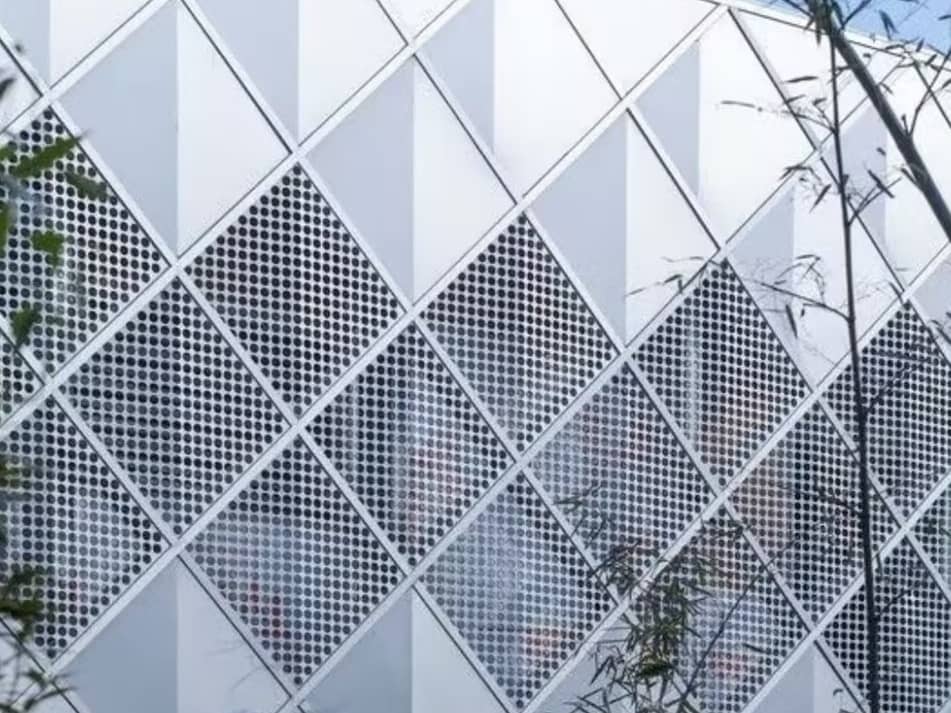
Perforated metal sheets are everywhere—from building facades to industrial filters. The manufacturing process involves punching precise hole patterns into metal sheets using specialized equipment. Custom metal perforation solutions allow manufacturers to create unique designs for specific applications. Understanding this process helps you make informed decisions when sourcing perforated sheet metal products.
What Is Perforated Sheet Metal?
Perforated sheet metal forms the backbone of countless industrial and architectural applications. Let's break down what makes this material so versatile and valuable.
Basic Definition and Characteristics
Perforated sheet metal is essentially flat metal with holes punched through it in specific patterns. Think of it like a giant cheese grater, but with precise, consistent holes arranged in rows. The holes can be round, square, slotted, or custom shapes, depending on what you need.
What makes the perforated sheet special is its strength-to-weight ratio. You get a sturdy material that's lighter than solid metal, which saves on shipping costs and makes installation easier. Plus, it allows air, light, and sound to pass through while maintaining structural integrity.
Types of Perforated Sheet Metal
Perforated sheet metal manufacturers work with various materials. Steel remains the most common choice because it's affordable and strong. Stainless steel works great for outdoor applications or food processing, where rust is a concern. Aluminum is lightweight and corrosion-resistant, perfect for architectural projects.
Custom perforated sheet metal also comes in copper, brass, and even titanium for specialized applications. The material choice depends on your environment, budget, and performance requirements.
Common Industrial Applications
You'll find perforated sheets everywhere. HVAC systems use it for air diffusers and vent covers. The automotive industry relies on it for radiator grills and speaker covers. In construction, architects use decorative perforated panels for building facades and interior design elements.
Food processing plants need perforated metal for strainers and drying racks. Mining operations use it for screening materials. The versatility of custom metal perforation solutions makes it valuable across dozens of industries.
How Do Perforated Sheet Metal Manufacturers Select Raw Materials?
Choosing the right material is the first critical decision in any perforated sheet project. Material selection affects everything from cost to performance and longevity.
Common Material Types
Most perforated sheet metal manufacturers stock standard materials like cold-rolled steel, hot-rolled steel, and galvanized steel. Cold-rolled steel has a smooth finish and tight tolerances. Hot-rolled steel costs less but has a rougher surface. Galvanized steel adds a zinc coating for rust protection.
For specialty projects, you might need exotic materials. Marine environments often require 316 stainless steel for maximum corrosion resistance. High-temperature applications might call for Inconel or other heat-resistant alloys.
Material Performance Requirements
The right material depends on several factors. Will the perforated sheet face harsh weather? You need corrosion-resistant materials. Does it need to support heavy loads? Thicker gauge steel might be necessary. Temperature extremes require materials that won't warp or crack.
Perforated sheet metal manufacturers evaluate tensile strength, ductility, and formability. Some materials punch cleaner than others. Soft metals like aluminum perforate easily with minimal burring, while harder materials require more force and sharper tooling.
Material Considerations for Custom Perforated Sheet Metal
Custom projects often push material boundaries. A client might need perforated copper for an artistic installation or perforated titanium for aerospace components. The material must punch cleanly without excessive tool wear.
Sheet thickness matters too. Thin materials (under very light gauges, sometimes down to around 0.002") can tear or distort during perforation. Thick materials (over about 0.25" on high-speed mechanical lines) require industrial-grade equipment. The hole-to-material-thickness ratio affects the final product quality significantly.
How Is Perforated Sheet Metal Made?
The journey from raw metal to finished perforated sheet involves multiple carefully controlled steps. Each stage ensures the final product meets exact specifications.
Step 1: Material Preparation and Inspection
Every custom perforated sheet metal project starts with quality raw material. Sheets arrive at the facility and go through inspection. Workers check for surface defects, dimensional accuracy, and material certification. Any damaged or off-spec material gets rejected immediately.
Next comes cleaning. Oil, dirt, or mill scale interferes with the perforation process. Most manufacturers use degreasing solutions or mechanical cleaning methods to ensure clean surfaces before punching begins.
Step 2: Perforation Pattern Design
Design work happens before any metal gets punched. Engineers work with CAD software to create the hole pattern. They consider hole size, spacing, and arrangement. The open area percentage affects both appearance and functionality—more holes mean more airflow but less structural strength.
Custom metal perforation solutions require detailed planning. The design must account for tooling limitations, material properties, and end-use requirements. A single mistake in the pattern design can ruin an entire production run.
For facade and interior feature walls, Ansus Metal is often cited as an example of how perforation patterns can be tailored to achieve specific visual rhythms, shading goals, and ventilation targets without sacrificing panel consistency.
Step 3: Perforation Processing Technology
The actual perforation happens on specialized machines. Most perforated sheet metal manufacturers use rotary pin perforation for high-volume production. The material feeds continuously through rotating cylinders with pins that punch holes as the sheet moves.
For thicker materials or custom patterns, CNC turret presses work better. These machines can create multiple hole sizes and shapes in a single setup. They're slower than rotary perforation but offer greater flexibility for custom perforated sheet metal projects.
Step 4: Post-Processing Techniques
After perforation, sheets often need additional work. Flattening removes any distortion from the punching process. Some applications require deburring to smooth rough edges around the holes. This can be done mechanically with wire brushes or chemically with acid baths.
Surface finishing comes next for many projects. Powder coating adds color and weather protection. Anodizing works for aluminum sheets. Some perforated sheet metal simply gets oiled to prevent rust during shipping and storage.
Step 5: Quality Inspection and Control
Quality checks happen throughout production. Operators measure hole sizes, spacing accuracy, and overall dimensions. Automated vision systems can detect defects that human eyes might miss. Every batch gets documented with inspection reports.
Final inspection ensures the perforated sheet meets specifications. This includes checking flatness, edge quality, and surface finish. Rejected sheets get reworked if possible or scrapped if the defects can't be fixed.
Which Technologies Do Perforated Sheet Metal Manufacturers Use?
Modern manufacturing offers several perforation methods, each with distinct advantages. Understanding these technologies helps you choose the right approach for your project.
Mechanical Punching Method
Traditional punch presses have been around for decades. They work like a giant cookie cutter—a die with the hole pattern presses into the metal sheet, punching out the material. These machines are reliable and cost-effective for standard patterns.
The downside? They're limited to repetitive patterns and can't easily switch between different hole sizes. Tool changes take time, which makes them less suitable for small custom runs.
CNC Perforation Systems
CNC turret presses revolutionized custom metal perforation solutions. These computer-controlled machines can punch various hole sizes and patterns without manual tool changes. They're perfect for prototypes and small production runs.
Modern CNC systems achieve impressive accuracy—typically within ±0.005 inches. They can also create complex patterns that would be impossible with traditional methods. The flexibility comes at a cost, though; CNC perforation runs slower than dedicated rotary systems.
If your project needs mixed hole sizes across multiple panel zones, our experienced team can help translate the design intent into manufacturable CNC-ready layouts and practical panel breakpoints. For a deeper look at how these capabilities are shaping building exteriors, see our overview of emerging metal curtain wall trends.
Laser Cutting Technology
Laser cutting offers the ultimate flexibility for perforated sheet metal. There's no physical tooling involved—a high-powered laser beam vaporizes the metal to create holes. This works great for intricate patterns, unusual shapes, or very small holes.
The catch is speed and cost. Laser cutting is significantly slower and more expensive per hole than mechanical punching. Most manufacturers reserve laser cutting for specialty applications where traditional perforation won't work.
Comparison of Different Technologies
| Technology | Speed | Flexibility | Cost | Best For |
|---|---|---|---|---|
| Rotary Pin | Very High | Low | Low | High-volume standard patterns |
| CNC Turret | Medium | High | Medium | Custom patterns, mixed hole sizes |
| Laser Cutting | Low | Very High | High | Complex designs, prototypes |
Each method has its place in manufacturing. High-volume production of standard perforated sheet benefits from rotary equipment. Custom perforated sheet metal projects often use CNC systems. Laser cutting handles the jobs that mechanical methods can't tackle.
FAQ
Q1. What Lead Times Should I Expect When Ordering Custom Perforated Sheet Metal?
Lead times vary based on project complexity and current production schedules. Standard perforated sheet patterns typically ship within about 2-3 weeks since manufacturers keep common materials in stock. Custom metal perforation solutions with unique hole patterns usually require around 3-4 weeks because tooling must be created or CNC programs need development. Large orders or exotic materials can extend timelines to several weeks or longer. Rush services are available from most perforated sheet metal manufacturers, though they come with premium pricing.
Q2. Can Perforated Sheet Metal Manufacturers Create Extremely Small or Unusually Large Holes?
Yes, but physics and equipment impose practical limits. Most standard perforation equipment handles holes from about 1/32 inch to more than 3 inches in diameter effectively. Smaller holes are possible using specialized tooling or laser cutting, with some manufacturers achieving holes as tiny as a few thousandths of an inch. However, the material thickness matters—you generally can't punch holes smaller than the sheet thickness without distortion. Custom perforated sheet metal with extreme specifications requires consultation with engineers to ensure manufacturability and structural integrity.
Q3. How Does the Hole Pattern Affect the Strength of Perforated Sheet Metal Products?
The open area percentage dramatically impacts strength. A perforated sheet with around 50-60% open area has roughly 15-25% of the yield strength of solid metal, though the relationship isn't perfectly linear. Hole spacing also matters—closely spaced holes create weak points where the material might tear. Perforated sheet metal manufacturers use established engineering formulas to calculate load-bearing capacity based on pattern, material, and thickness. For structural applications, always work with manufacturers to verify that your custom metal perforation solutions meet load requirements.
Conclusion
Finding the right perforated sheet metal manufacturer makes all the difference in your project's success. Look for companies with modern equipment, quality certifications, and experience in your industry. Ready to start your project? Contact experienced perforated sheet metal manufacturers today to discuss your custom metal perforation solutions and get accurate quotes.
If your next project involves facade panels, ceilings, screens, or industrial enclosures, consider reaching out to us, Ansus Metal, for pattern guidance, material suggestions, and sample support. As your specialized architectural and industrial metal partner, we can help you move from concept to production-ready perforated panels with fewer revisions and more predictable results.
Share:
Primary Differences Between Woven & Welded Wire Mesh
What are the Different Types of Expanded Metal?